
 English
 Spanish
 Russian
 Ukrainian
 Korean
 Chinese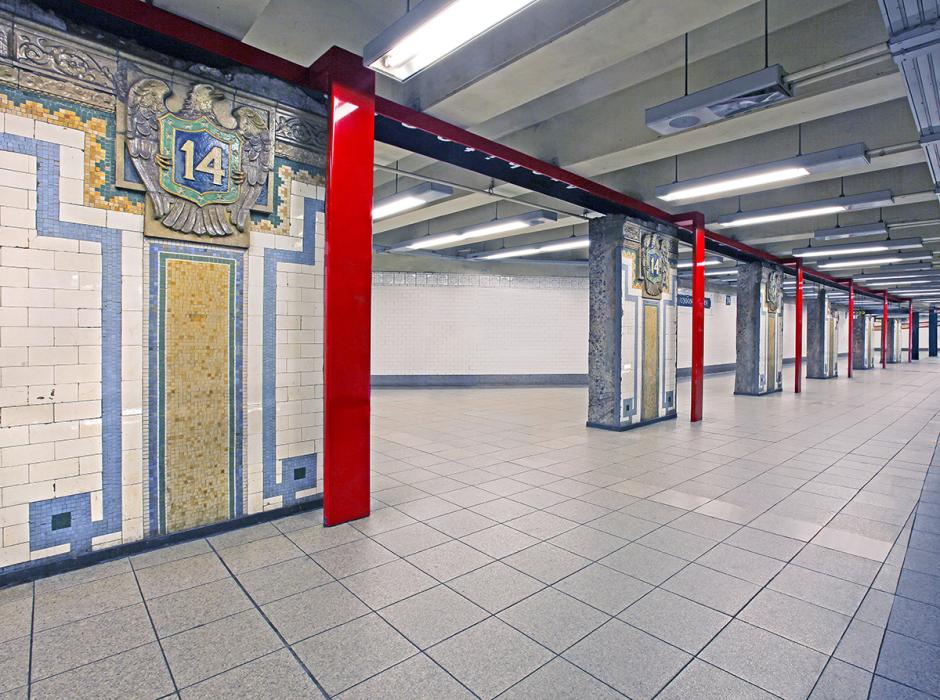
Framing Union Square
1998
14th Street–Union Square (L, N, Q, R, 4, 5, 6)
New York City Transit
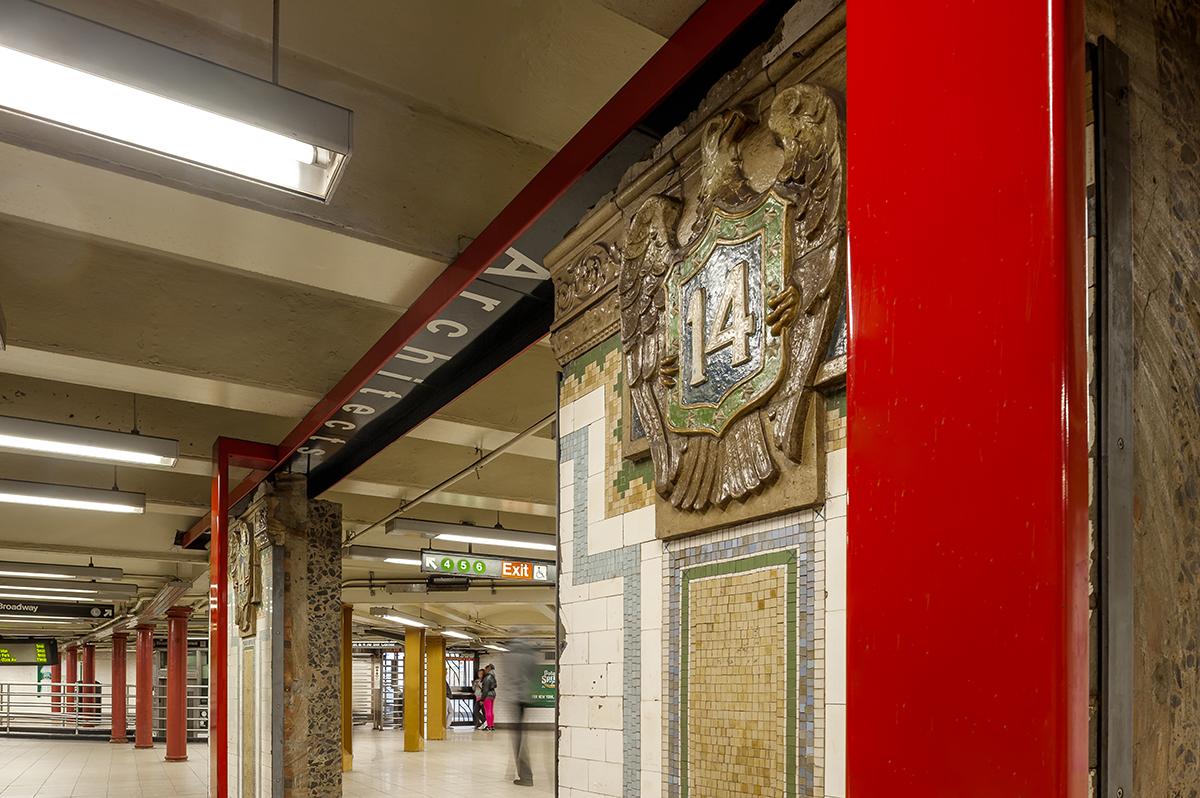
Mary Miss worked with architect Lee Harris Pomeroy to use the rehabilitation of Union Square station as an opportunity to uncover hidden structural elements, cables, and conduits — some of which were still functional, and others that were replaced by new improvements. Old decorative work reappeared during construction, including mosaics, pilasters, name plaques, and six terra cotta eagles from the 1904 station that were presumed lost.
Miss brings these treasures to the surface though a network of frames, windows, apertures, and mirrors. The bright red frames stand out, but what they frame is more subtle: a bolt, a fragment of ancient-looking mosaic, a piece of rusted steel cable. Other frames call attention to the station's historic name plaques. "I'm inviting the public to look below the surface, to see a 'slice' of the station, its structure, its history," says the artist. "In this most public of places, the apertures offer an intimate engagement. Looking in, you will see the station's workings — sometimes you will see layers of words and reflected images, including your own!"
Miss brings these treasures to the surface though a network of frames, windows, apertures, and mirrors. The bright red frames stand out, but what they frame is more subtle: a bolt, a fragment of ancient-looking mosaic, a piece of rusted steel cable. Other frames call attention to the station's historic name plaques. "I'm inviting the public to look below the surface, to see a 'slice' of the station, its structure, its history," says the artist. "In this most public of places, the apertures offer an intimate engagement. Looking in, you will see the station's workings — sometimes you will see layers of words and reflected images, including your own!"
AP Transit
Download App
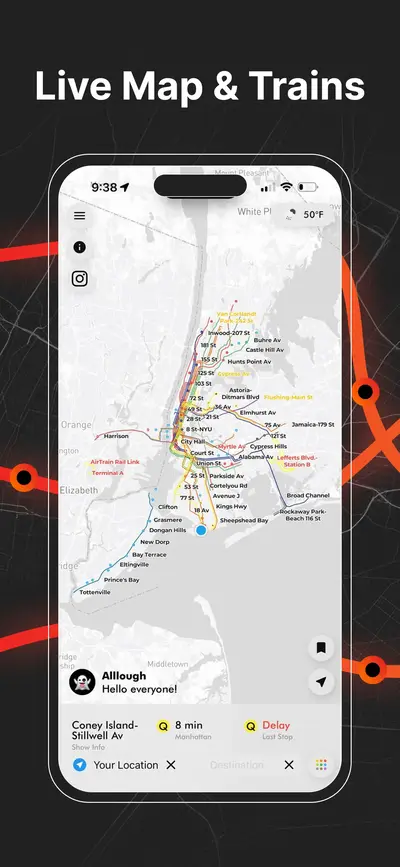
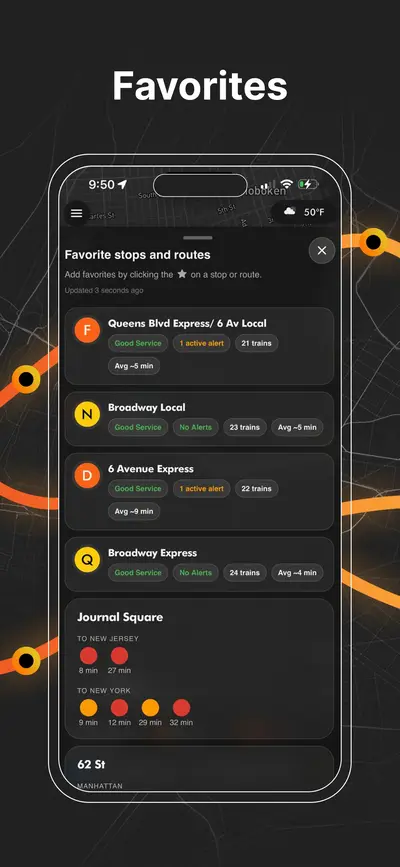
Real-time NYC subway, PATH, JFK AirTrain, route planning, station exits, transfer guidance, and service alerts in one map.