
 English
 Spanish
 Russian
 Ukrainian
 Korean
 Chinese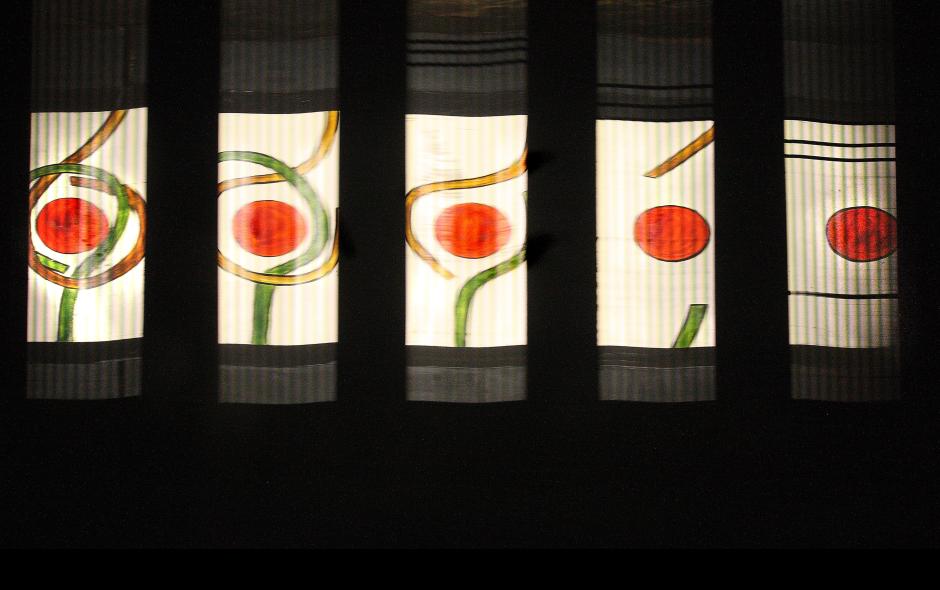
Masstransiscope
2008
DeKalb Avenue (B, Q, R)
New York City Transit
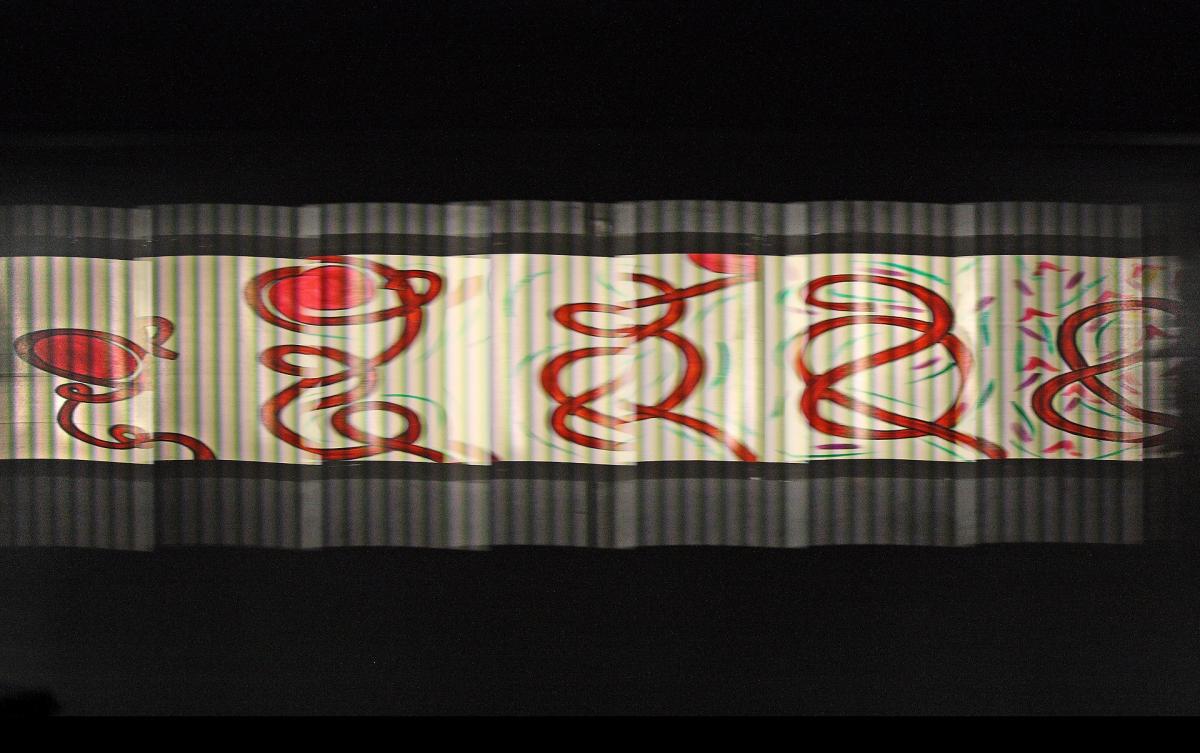
"Masstransiscope” turns the subway into a movie machine, presenting a colorful, animated "moving picture" to commuters as the train moves through the tunnel. The artwork has been viewed by millions of commuters from subway cars departing from the DeKalb Avenue station on the Manhattan bound Q or B trains.
The 228 hand-painted panels are viewed through a series of vertical slits set into a specially constructed housing that runs the full 300' length of the old station and illuminated by fluorescent lights. You see the work through the slits and the light reflects off the painting and back through the slits. The piece works on the principle of the Zoetrope, a 19th century optical toy. The movement of the train passing in front of the exhibition creates the illusion of a 20-second animated movie. In a regular movie the film passes through a projector to create an illusion of motion and the audience sits still. With “Masstransiscope” it is the audience that moves while the film stays in place.
A disarmingly simple artwork was originally installed in the unused subway station at Myrtle Avenue in 1980, the artwork was restored, with heavy cleaning by volunteers, and became visible again in 2008.
The 228 hand-painted panels are viewed through a series of vertical slits set into a specially constructed housing that runs the full 300' length of the old station and illuminated by fluorescent lights. You see the work through the slits and the light reflects off the painting and back through the slits. The piece works on the principle of the Zoetrope, a 19th century optical toy. The movement of the train passing in front of the exhibition creates the illusion of a 20-second animated movie. In a regular movie the film passes through a projector to create an illusion of motion and the audience sits still. With “Masstransiscope” it is the audience that moves while the film stays in place.
A disarmingly simple artwork was originally installed in the unused subway station at Myrtle Avenue in 1980, the artwork was restored, with heavy cleaning by volunteers, and became visible again in 2008.
AP Transit
Download App
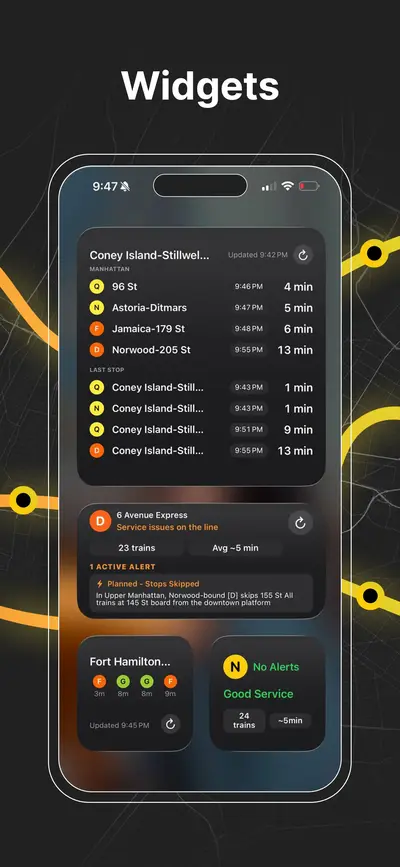
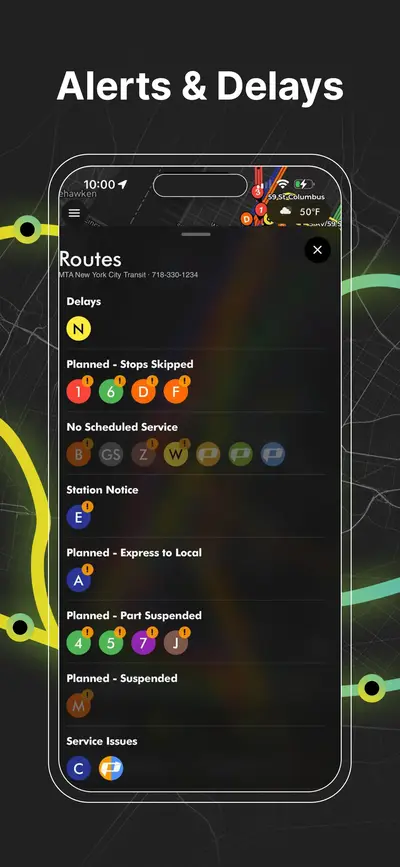
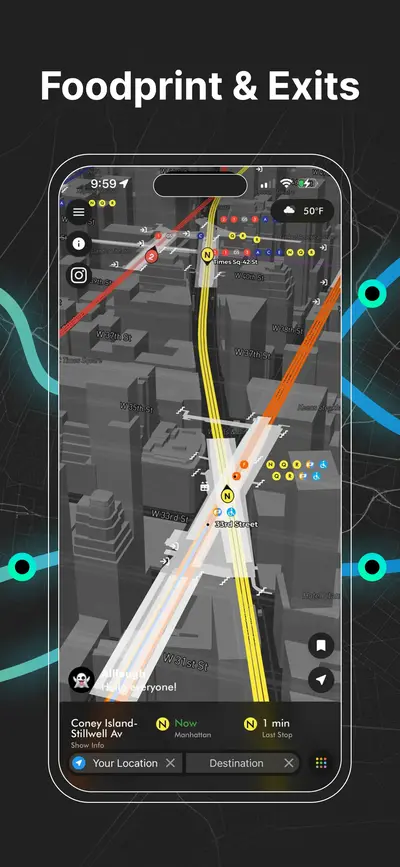
Real-time NYC subway, PATH, JFK AirTrain, route planning, station exits, transfer guidance, and service alerts in one map.